From Existing to Living: How Can You Make the Shift?
Once you decide that you no longer want to waste your most precious asset — time — merely existing instead of truly living, a new question emerges:
How can this transformation be achieved in the most efficient and effective way?
If the answer were simple, most people would succeed. Yet many people who have actively engaged in personal development have still ended their lives with the regret of not having truly lived. They read books, they attended seminars, they followed numerous trainings and yet, they still felt at the end of their lives they never fully lived.
Their failures suggest structural limitations in traditional approaches.
What could be the structural limitations of personal development approaches ?
First: The Focus on the “Persona”
Most personal development approaches aim to improve the personality. The word personality comes from the Greek word persona — the mask worn by actors in ancient theater. In many cases, personal development is definitely really helping us better play our role in our community: we optimize our external behavior and we adapt more effectively to external circumstances. But as long as we are identifying ourselves to our personality, to the mask we wear, we can not really become our true selves.
Living requires more than optimizing our personality. It requires individuation —the process of becoming who we truly are beyond all the conditioning, the inherited beliefs, and mental patterns we have received.
Second: Limiting Assumptions
Over the past decades, our understanding of reality has evolved dramatically. Quantum physics has revealed that reality is not limited to what our senses perceive. In fact the foundational assumptions on which science was based so far like strict determinism, linear causality, pure materialism and randomness as the default explanation have now been proven wrong through many recent experiments and factual observations.
At the same time, progress in neuroscience, endocrinology, and epigenetics have demonstrated that change is possible at levels once thought absolutely impossible.
The implications are really profound.
Yet many personal development frameworks which have been developed before these major breakthroughs are not leveraging this major evolutions in our knowledge on our subtle interactions with the reality we experience and on the various ways we have to trigger profound changes in our life.
Third: The Lack of a process mindset
Over more than 20 years of working in organizational transformation, I have repeatedly observed that success depends on following a structured process — a conclusion supported by extensive research in the field.
While fewer formal studies have focused specifically on the role of process in individual transformation, there is a powerful parallel worth noting. Joseph Campbell’s study of global myths revealed that the hero’s journey consistently follows a defined sequence — from the call to adventure to the return as a hero.
This recurring pattern across cultures is unlikely to be coincidence. It suggests that transformation — whether organizational or personal — unfolds through identifiable stages.
When key steps are overlooked, the transformation is weakened or derailed.
When they are respected and followed with discipline, the probability of success increases dramatically.
The need of a new framework
The failures of all the persons who tried the personal development approaches and still ended their lives with the regret of not having truly lived was therefore not an effort issue, but more due to the focus in itself, the limitations in the knowledge on how we can interact with reality on the most subtle ways, the lack of understanding on some mechanisms we can use to trigger profound changes in our body and overall the lack of an efficient and effective transformation process.
If we want to fully leverage all the latest knowledge of the past decades and the power of a structured transformation process, a new framework becomes necessary.
We have named this framework FLOW, inspired by the state of flow described in positive psychology — the state in which optimal performance, meaningful contribution, and deep fulfillment converge — since this state is coherent with the very objective of truly living.
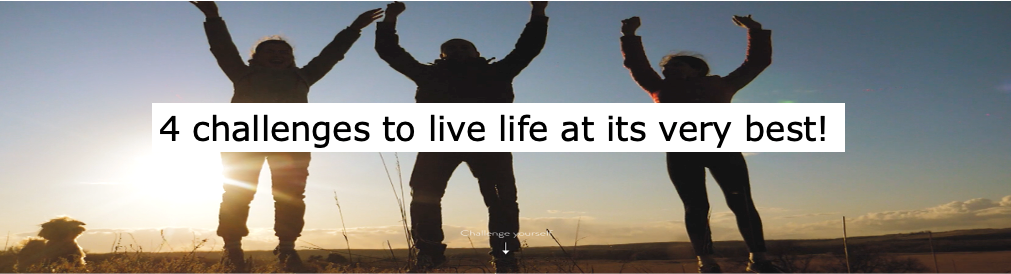
The FLOW framework is built on four essential stages required to move from mere existence to full, conscious living.
F – Freeing Yourself from Fear
Fear is the brain’s most powerful weapon your brain is actually using against you to keep you within its comfort zone. Transformation begins by learning to transcend limiting fears and having an unwavering commitment.
L – Letting Go
In order to find your true self, you must let go of inherited beliefs, conditioning, and mental patterns that serve your personality but limit you to live fully.
O – Owning Your Life
The next step is to reclaim your full sovereignty to become your true self with a purpose, values, goals and actions completely aligned.
W – Widening Awareness
The final step is to expand your awareness to activate extraordinary inner capacities that allow you to shape your destiny more intentionally.
For each step, we have researched the most coherent tools and best practices aligned with current scientific knowledge. The framework makes you benefit from all the research which was done over these several years looking at all possible approaches.
An Invitation
If you are interested to learn more about this unique framework, we invite you register in order for you to receive the exclusive communication of the framework.
By helping each other to become the highest version of ourselves, we will build together a better world !